Compare Carbon Steel Skillets

Best Carbon Steel Skillets - What Lasts

/carbon-steel-skillets/ Updated 2025-12-18

Carbon steel skillets are a favorite among professional chefs and serious home cooks for one simple reason: they last. Made from durable carbon steel with no fragile coatings, these pans combine the heat retention of cast iron with faster responsiveness and lighter weight. When you choose the right one — thick enough to resist warping, simply constructed, and easy to reseason — a carbon steel skillet can serve you for decades. This guide focuses on long-lasting carbon steel cookware, breaking down what actually matters for durability, repairability, and everyday performance. Whether you’re searching for the best carbon steel skillet for searing, induction cooking, or oven use, we’ll help you understand the real differences that separate heirloom-quality pans from short-lived alternatives.

Compare the Best of the Best

Product Product Product Product Product
de Buyer

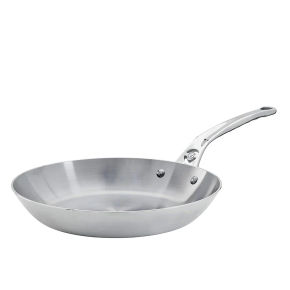
de Buyer MINERAL B Pro Carbon Steel Country Fry Pan

Scored 68.6 with a high confidence from 6 sources. Last updated on 2025-12-18.
Matfer Bourgeat

Matfer Bourgeat Black Carbon Steel Frying Pan

Scored 64.8 with a high confidence from 10 sources. Last updated on 2025-12-18.
Lodge Cast Iron

Lodge Carbon Steel Skillet

Scored 60.2 with a high confidence from 11 sources. Last updated on 2025-12-18.
Misen

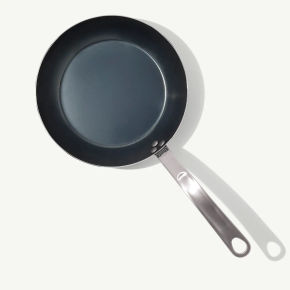
Misen Carbon Frying Pan

Scored 57.1 with a medium confidence from 11 sources. Last updated on 2025-12-18.
Made In

Made In Cookware Blue Carbon Steel Frying Pan

Scored 50.8 with a medium confidence from 14 sources. Last updated on 2025-12-18.
Brand 73.7%
  • PRO Founded in 1830, de Buyer has nearly two centuries of continuous operation and is widely referenced by professional chefs and culinary schools, indicating long-standing trust and reliability.
  • CON As a private company, detailed financial performance data is not publicly disclosed, limiting independent assessment of financial resilience.
Brand 48.4%
  • PRO Matfer Bourgeat is a family-owned, long‑lived company with origins back to 1814 and ongoing operations worldwide, including a US subsidiary operating for 30+ years, indicating organizational stability.
  • CON While sustainability and durability are referenced, there is no clearly articulated public mission statement on the US site that explicitly prioritizes broader sustainability, repairability, or product end‑of‑life support beyond warranty coverage.
Brand 87.8%
  • PRO Serious Eats names the Lodge 10.25-inch pre-seasoned skillet its "Best Cast Iron Skillet," citing long-term durability, strong searing, and exceptional value; testing also shows it heated fastest among the lineup.
  • CON As a privately held company, detailed financial statements and transparency are limited compared to public firms.
Brand 38.4%
  • PRO Misen is a funded, Series A direct-to-consumer company founded in 2015 and headquartered in Brooklyn with multiple funding rounds and continued product expansion, indicating ongoing operational activity.
  • CON Misen’s mission does not explicitly commit to sustainability, repairability, or explicit environmental goals outside vague references to eco-friendly materials/packaging; no formal durability/repair initiatives are clearly defined.
Brand 44.2%
  • PRO Made In is a privately owned company founded in 2017 that has raised capital from notable investors including private equity and industry founders, indicating some level of financial backing and growth. (Wikipedia)
  • CON The official mission and values language on the brand’s site focuses on performance and professional quality but does not explicitly commit to sustainability or repairability. (brand site)
Warranty 61.5%
  • PRO Manufacturer states a lifetime warranty against manufacturing defects in materials and workmanship.
  • CON Excludes damage from overheating, improper seasoning, corrosion, or warping due to misuse.
Warranty 76.0%
  • PRO Warranty terms are published on the brand's US website in plain language.
  • CON No detailed online form or tracking system; process may require direct correspondence and shipping of product.
Warranty 60.5%
  • PRO Covers cracking or warping under normal use
  • CON May require proof of purchase and product return
Warranty 65.7%
  • PRO Warranty terms publicly available online
  • CON Excludes misuse, overheating, improper care, and normal wear
Warranty 59.4%
  • PRO Warranty terms are published on the manufacturer’s website in plain language.
  • CON No detailed publicly available step-by-step claim process or paperwork clarity.
Durability 71.6%
  • PRO Beeswax-based protective coating intended to prevent rust before seasoning.
  • CON Handle is attached with rivets rather than formed from a single piece.
Durability 59.8%
  • PRO Comes with a high-viscosity vegetable oil-based protective coating to prevent rust during transit.
  • CON Rapid heating on induction or glass surfaces may occasionally warp pan in rare cases.
Durability 48.0%
  • PRO Pre-seasoned with vegetable oil
  • CON Thinner steel increases risk of warping if heated unevenly
Durability 38.2%
  • PRO Nitrided carbon steel surface improves rust resistance
  • CON Not a single-piece stamped construction
Durability 28.6%
  • PRO Blue carbon steel has a heat-treated finish that helps prevent oxidation and aids seasoning.
  • CON Handle is separate from pan body and likely attached with rivets or fasteners.
Fixability 66.0%
  • PRO Bare carbon steel can be scrubbed, stripped, and re-seasoned indefinitely.
  • CON No evidence of manufacturer-supplied replacement handles for consumer repair.
Fixability 67.2%
  • PRO Handle is riveted securely to the pan, a standard durable attachment method.
  • CON No clear information on availability of replacement handles from manufacturer.
Fixability 45.5%
  • PRO Carbon steel can be stripped and re-seasoned repeatedly
  • CON No manufacturer-supported replacement handles offered
Fixability 63.2%
  • PRO Carbon steel can be fully stripped and re-seasoned
  • CON No replacement handles sold separately
Fixability 43.8%
  • PRO Carbon steel material can be seasoned, stripped, and re-seasoned for long life.
  • CON No clear evidence that manufacturer provides replacement handles.
Function 70.4%
  • PRO Thick carbon steel provides strong heat retention for searing.
  • CON Pan weight can feel front-heavy when fully loaded.
Function 72.4%
  • PRO Carbon steel construction provides good heat retention for searing and stable cooking temperatures.
  • CON High-output induction burners may cause uneven heating or delayed surface stabilization initially.
Function 59.1%
  • PRO Good heat retention for searing and frying
  • CON Can feel heavy and less comfortable than higher-end designs
Function 79.8%
  • PRO Responds quickly to heat changes
  • CON Lighter than cast iron, retains less heat than very thick pans
Function 77.8%
  • PRO Carbon steel construction retains heat and provides chef-level searing performance.
  • CON Some consumer commentary notes dissatisfaction with handle design or comfort.

See details on our Scoring Method.

Carbon Steel Skillets Shopper's Guide

Carbon steel skillets sit in a sweet spot between cast iron and stainless steel. They’re made from simple iron-carbon alloy sheets, but when done right, they’re some of the most durable, repairable, and high-performing pans you can buy. Professional kitchens love them for their searing power and responsiveness, while home cooks appreciate that a well-made carbon steel pan can last decades — or longer — with basic care.

What Matters Most for Longevity

When comparing carbon steel skillets, durability starts with the steel itself. Steel Thickness is the single biggest factor: thicker pans (around 3.0 mm or more for full-size skillets) resist warping, stay flatter over time, and tolerate high-heat burners better. Closely related is Heat Warp Resistance, which shows up in real-world use as whether a pan stays flat or starts to spin on glass or induction cooktops. Construction also matters — One-Piece Construction (or robust riveted handles) avoids weak points that can fail after years of heating and cooling cycles.

Surface treatments deserve a practical lens. A bare or lightly pre-seasoned surface is ideal for longevity because it can always be stripped and rebuilt. Fragile coatings or cosmetic finishes don’t add durability and can limit how aggressively you can restore the pan later.

Fixability: Why Carbon Steel Excels

Carbon steel is one of the most repair-friendly cookware materials available. A rusty or neglected pan is rarely ruined. High Reseasoning Tolerance means you can scrub, sand, or oven-season repeatedly without harming the metal. Even deeper issues — like carbon buildup or light warping — are often reversible with household tools. Look for skillets with straightforward Handle Attachment Methods and, ideally, Replacement Handle Availability, which make long-term ownership much easier.

In practice, lower Repair Complexity is what separates heirloom pans from disposable ones. If a skillet can be restored by the owner instead of replaced, it’s far more likely to stay in use for decades.

Performance Trade-Offs to Know Before You Buy

From a cooking standpoint, carbon steel is defined by the balance between Heat Retention and Heat Responsiveness. Thicker pans store more heat and excel at searing, but they’re slower to adjust. Thinner pans respond faster but may warp or lose stability over time. There’s no single “best” option — just trade-offs depending on how and where you cook.

Other functional details matter, too:

  • Oven-Safe Temperature should be at least 600 °F (315 °C) so you’re not limited in seasoning or cooking techniques.
  • Handle Ergonomics affect daily comfort, especially with heavier, thicker skillets that reward durability with extra mass.

Shopper’s Guide: How to Spot a High-Quality Carbon Steel Skillet

  • Check the thickness: manufacturers that publish steel thickness are usually confident in their build.
  • Favor simple designs: fewer parts, fewer coatings, fewer failure points.
  • Read long-term reviews: warping, loose handles, and spinning are durability red flags.
  • Don’t fear maintenance: a pan that requires seasoning but can always be restored is often the one that lasts the longest.

A great carbon steel skillet isn’t about perfection out of the box — it’s about how well it holds up, and how easily it can be brought back, year after year.